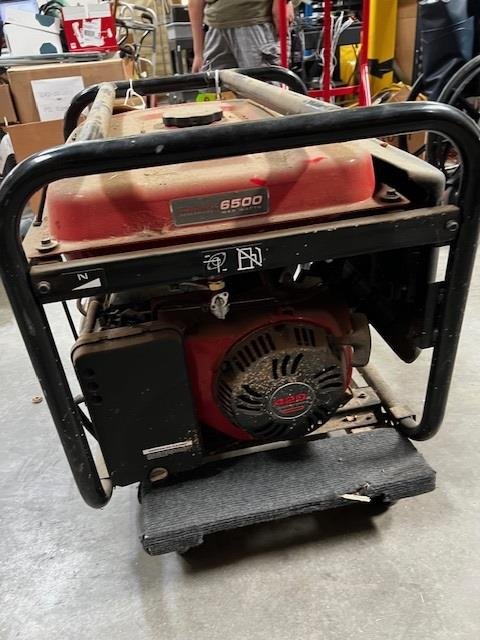
When the lights go out, the job site needs power, or your RV needs to feel like home, a reliable generator isn't just a convenience—it's a lifeline. And in the bustling market of portable power, the Predator 6500 generator frequently emerges as a top contender, often prompting conversations around its performance and how it stacks up against more established rivals. Is it truly the value champion it's often made out to be, or are there hidden compromises? Let's dive deep.
This isn't just a spec sheet review; it's a no-nonsense guide designed to give you the full picture. We'll unbox what makes the Predator 6500 tick, explore its real-world capabilities, and put its performance and value to the test in a head-to-head comparison with a market leader like Generac.
Predator 6500 Generator: At a Glance
- Power Output: 5500 Running Watts / 6500 Peak Watts (enough for most home essentials, job site tools, or RV AC).
- Engine: Robust 301cc OHV, air-cooled, gasoline.
- Fuel Capacity & Runtime: Generous 5-gallon tank, delivering up to 14.5 hours at 25% load.
- Noise Level: 73 dB – noticeable, but on par with many conventional generators.
- Portability: Integrated wheel kit and folding handle make its 155 lbs manageable.
- Outlets: Versatile, including four 120V household, one 120V/240V 30A twist-lock, and a 12V DC.
- Key Features: Low oil shutdown, fuel gauge, circuit breakers, simple recoil start.
- Value Proposition: Exceptionally priced ($549-$649), offering significant savings over comparable national brands.
- Best For: Home backup, job sites, RVs, mobile events for budget-conscious buyers who prioritize power and runtime.
The Predator 6500: A Closer Look at What Matters
The Predator 6500 has carved out a niche for itself as a high-value portable generator. It's not aiming to be the quietest or the most feature-rich, but rather a dependable workhorse that delivers substantial power without breaking the bank. Think of it as the sturdy, no-frills pickup truck of the generator world—it gets the job done, and reliably so.
Heart of the Beast: Power & Engine Specs
At its core, the Predator 6500 is built around a potent 301cc OHV (Overhead Valve) air-cooled gasoline engine. This powerplant delivers a steady 5500 running watts and can surge up to 6500 peak watts to handle the initial startup demands of motor-driven appliances. This output places it squarely in the versatile middleweight class—more muscular than small recreational units, yet more portable than heavy-duty commercial behemoths.
A 5-gallon fuel tank is a significant asset, allowing for an impressive runtime of approximately 14.5 hours at 25% load. That's a full night, and then some, running essential appliances during an outage without needing to refuel. The engine itself is designed for durability, featuring a cast-iron cylinder sleeve and a low oil shutdown system that protects your investment from catastrophic damage.
Built for Real Life: Key Features that Matter
Beyond raw power, what sets a generator apart are the practical features that enhance usability and safety.
- Comprehensive Control Panel: Everything you need is right there: multiple outlets, clearly marked circuit breakers, a voltage selector, and intuitive engine controls. It's straightforward, even for first-time users.
- Mobility Kit: Weighing in at 155 pounds, the 6500 isn't a featherweight. However, the integrated wheel kit, complete with flat-free tires and a folding handle, makes moving it around surprisingly easy. You won't be carrying it far, but you can certainly roll it.
- Safety First: Standard safety features include automatic low oil shutdown to prevent engine damage and circuit breakers to protect against overloads. These are non-negotiable for any reputable generator.
The Price Tag: Unbeatable Value?
This is where the Predator 6500 truly shines. With a typical price point hovering around $549-$649, it significantly undercuts comparable national brands, which often retail for $800 to $1,200 or more. For budget-conscious buyers who still need substantial power and reliability, this value proposition is extremely compelling. You're getting a lot of bang for your buck.
What It Sounds Like: Noise Level
At 73 dB, the Predator 6500 is not a silent operator. To put that in perspective, 70 dB is roughly the sound of a vacuum cleaner, and 75 dB is about the noise level inside a car at 60 mph. While perfectly acceptable for a job site or emergency backup positioned away from living areas, it's not ideal for quiet campgrounds or close-quarter tailgating if noise is a major concern. For ultra-quiet operation, an inverter generator would be a better, though typically more expensive, choice.
Real-World Applications: Powering Your Life
With 5500 running watts and 6500 peak watts, the Predator 6500 is a versatile beast capable of handling a wide array of power needs. Here's what that looks like in practical terms:
Home Backup: Weathering the Storm
During a power outage, the Predator 6500 can be a lifesaver. It has enough grunt to run critical household items, though strategic load management is key. You could power:
- Refrigerator (700W) & Freezer (500W): Keeping your food fresh.
- Furnace Fan (800W): For essential heating (natural gas/propane furnaces, not electric).
- Lights (400-600W): Several rooms of lighting.
- TV (300W) & Internet/Computer (200-300W): Staying connected and entertained.
- Well Pump (1000W start/500W run, intermittent): Essential for homes with well water.
- Window AC Unit (1100W): To keep a key room cool.
- Microwave (1000W, intermittent): For quick meals.
The key here is not to run everything at once. You'd cycle high-wattage items like the microwave or well pump, running them only when needed, to keep the total load under 5500 watts. Many users report it successfully powered their homes for days during major storm events like Hurricane Ian, operating 16 hours a day.
Worksite Warrior: Tools and Projects
For contractors and DIY enthusiasts, this generator is a reliable companion. Its 30-amp 120V/240V twist-lock outlet is especially useful for more demanding tools. You can run:
- Circular Saw (1500W)
- Air Compressor (1800W start/1000W run)
- Work Lights (500W)
- Battery Chargers (200W)
- Concrete Mixer (850W)
- Various small power tools (600-1200W)
It provides the necessary juice to keep your project moving, even in remote locations.
RV & Camping: Off-Grid Adventures
Taking your RV off the grid or camping in comfort is well within the Predator 6500's capabilities. The 30-amp outlet allows for a direct connection to many RV electrical systems. You could power:
- RV Air Conditioner (1500-2000W start/1000-1500W run): A must-have in warm weather.
- Electric Cooking Appliances (1000-1500W)
- Lights (200-400W) & Entertainment Systems (200-300W)
- Water Pump (500W) & Coffee Maker (800-1200W)
It offers the freedom to enjoy most of your RV's amenities wherever your travels take you.
Mobile Business & Events: Power on the Go
From food trucks to outdoor events, mobile businesses often need portable power. The Predator 6500 can keep operations running smoothly by powering:
- Refrigeration Equipment (700-1500W)
- Cooking Appliances (600-1500W)
- POS Systems (200W)
- Lighting (400W)
- PA Systems (300-500W)
- Fans/Heaters (1000-1500W)
It provides the essential power backbone for temporary setups and mobile operations.
Getting Started: Setup & Safe Operation
Before you can harness the Predator 6500's power, a little preparation is in order. Getting it set up correctly and operating it safely are paramount.
First Steps: Initial Assembly & Fluids
- Attach Wheels: If not already installed, secure the wheel kit. This will save your back!
- Add Oil: Crucially, generators are shipped without oil. You'll need about 1.16 liters (37 ounces) of SAE 10W-30 oil (or 5W-30 if operating in consistently cold weather). Do NOT overfill.
- Add Fuel: Use fresh, unleaded gasoline with an octane rating of 87 or higher. Avoid fuel with more than 10% ethanol, as it can damage the engine over time.
- Grounding: For safety, ground your generator according to the owner's manual. This usually involves connecting a ground wire to a grounding rod.
- Pre-check: Before every use, quickly check fluid levels, ensure all guards are in place, and the air filter is clean.
Firing It Up: Step-by-Step Starting Guide
- Placement: Always place the generator outdoors in a well-ventilated area, away from windows and doors.
- Check Levels: Confirm oil and fuel are at appropriate levels.
- Fuel Valve: Turn the fuel valve to the "ON" position.
- Choke: For a cold start, move the choke lever to "CLOSED." If the engine is warm, you might not need to use the choke, or only partially.
- Engine Switch: Turn the engine switch to "ON."
- Recoil Start: Grip the starter handle firmly and pull it quickly and smoothly until the engine starts.
- Choke Adjustment: Once the engine fires, gradually move the choke lever to the "OPEN" position as the engine warms up.
- Warm-Up: Allow the generator to run for 1-2 minutes before connecting any electrical loads.
Safety First: Non-Negotiable Practices
Operating a generator carries inherent risks, but most can be mitigated with proper safety protocols.
- Carbon Monoxide (CO) Hazard: This is the most critical safety warning. NEVER operate a generator indoors, in a garage, basement, or any enclosed space. Position it outside, at least 20 feet away from doors, windows, and vents, with the exhaust pointed away from occupied areas. Consider CO detectors in your home.
- Fire Prevention: Gasoline is highly flammable. Allow the generator to cool completely before refueling. Clean up any spilled fuel immediately. Store gasoline in approved containers away from living areas.
- Electrical Safety: Do not operate the generator in wet conditions unless it is properly protected (e.g., under an open-sided canopy). Use heavy-duty, outdoor-rated extension cords (10-gauge is recommended for longer runs or high-draw appliances). Never backfeed power into your home's electrical system without a professionally installed transfer switch.
- Load Management: Always connect motor-driven appliances (like refrigerators or power tools) one at a time, starting with the largest, and allow them to stabilize before adding more. Never exceed the generator's running watt capacity (5500W for the Predator 6500).
- Shutting Down: Always disconnect all electrical loads before turning off the generator. This prevents potential damage to your appliances or the generator itself.
Keeping It Running Strong: Maintenance Made Easy
Regular maintenance is the secret sauce to a long, trouble-free life for your Predator 6500. Skipping it is like neglecting oil changes in your car—eventually, you'll pay a much higher price.
Your Maintenance Checklist
Here's a simplified maintenance schedule to keep your generator in prime condition:
- Before Each Use: Check oil level, air filter cleanliness, fuel level, loose parts, and air inlets.
- After First 20 Hours (Break-in Period): Change the engine oil. This is crucial to remove any manufacturing debris. Also, check/adjust valve clearance and check/clean the spark arrester.
- Every 50 Hours or 3 Months: Change the engine oil. Clean the air filter and fuel sediment cup. Inspect and clean the spark plug.
- Every 100 Hours or 6 Months: Change engine oil, clean/replace air filter, replace spark plug, clean fuel tank/filter, inspect/clean spark arrester, check fuel lines.
- Every 300 Hours or Annually: Replace spark plug and air filter. Clean combustion chamber (professional service often recommended). Check/adjust valve clearance. Clean fuel tank/filter, inspect all fuel lines.
Key Procedures Explained
- Oil Change: Drain the old oil (it's often a bit messy due to the drain plug placement). Refill with approximately 1.16 liters (37 ounces) of SAE 10W-30.
- Air Filter: The foam filter can be washed in warm, soapy water, rinsed, dried, and lightly oiled. Paper elements should be tapped clean or replaced.
- Spark Plug: Inspect the spark plug (type F7TC or equivalent) for fouling or wear. Set the gap to 0.028-0.031 inches. Replace if worn or damaged.
- Long-Term Storage: If you're storing the generator for more than 30 days, add a fuel stabilizer to the tank, run the engine for a few minutes, then turn off the fuel valve and let the engine run dry. Change the oil, remove the spark plug, add a teaspoon of fresh oil into the cylinder, and pull the starter cord a few times to distribute it before reinstalling the plug. Clean the exterior and store in a dry place.
Troubleshooting Common Generator Glitches
Even the most reliable machines can occasionally hiccup. Knowing how to diagnose basic issues can save you time and frustration.
Why Won't It Start?
- No Fuel/Stale Fuel: Check the tank! Old gasoline (over 30 days) can gum up the carburetor.
- Low Oil: The low oil shutdown prevents starting. Check and fill the oil reservoir.
- Dirty/Damaged Spark Plug: Inspect, clean, or replace the spark plug.
- Wrong Choke Position: Ensure the choke is closed for cold starts, then gradually opened.
- Fuel Valve Closed: Make sure the fuel valve is in the "ON" position.
- Clogged Air Filter: A dirty air filter restricts airflow.
- Carburetor Issues: If fuel isn't flowing, the carburetor jets might be clogged (often due to old fuel).
Power Problems: Low or No Output
- Circuit Breaker Tripped: Check the circuit breakers on the control panel.
- Faulty Outlet: Try a different outlet.
- Overload: You're trying to draw too much power. Disconnect some devices.
- AVR (Automatic Voltage Regulator) Failure: If voltage is unstable or non-existent, the AVR might be faulty (often requires professional repair).
- Capacitor Issues/Brush Wear: Less common, but can lead to no power output.
- Engine Speed Too Low: The engine needs to maintain 3600 RPM under load for proper 60Hz output.
Engine Performance Issues
- Poor Fuel Quality: Always use fresh, high-octane (87+) gasoline.
- Carburetor Malfunction: Can lead to rough running, surging, or excessive fuel consumption.
- Restricted Air Filter/Exhaust: Limits engine breathing.
- Governor Adjustment: Controls engine speed; if off, performance suffers.
Unusual Noises & Vibrations
- Excessive Vibration: Could be loose engine mounts, an unbalanced load, or internal engine issues.
- Strange Noises: Rattling, knocking, or grinding sounds indicate loose parts, bearing wear, valve issues, or exhaust leaks. Shut down and investigate.
Parts & Accessories: Beyond the Basics
To keep your Predator 6500 running smoothly for years and to enhance its utility, consider these parts and accessories:
Essential Spares for Peace of Mind
- Air Filter: Keep a spare, especially if operating in dusty environments.
- Spark Plug (F7TC or equivalent): They're inexpensive and critical for ignition.
- Engine Oil (SAE 10W-30): Always have a quart or two on hand for changes.
- Fuel Filter: An often-overlooked component that prevents carburetor issues.
Upgrades & Useful Add-ons
- Generator Cover: Protects your investment from the elements during storage.
- Hour Meter: Helps track usage for scheduled maintenance intervals.
- Heavy-Duty Extension Cords: 10-gauge cords are crucial for preventing voltage drop and safely running high-draw appliances.
- Transfer Switch Kit: For safe and permanent connection to your home's electrical system (professional installation required).
- Extended Run Fuel System: For those who need even longer runtimes without constant refueling, aftermarket kits are available.
Predator 6500 Generator Performance & Comparison Against Top Rivals
Now for the main event: How does the Predator 6500 truly stack up when pitted against industry giants? We'll focus on a comprehensive comparison with Generac, a well-established leader known for its reliability and advanced technology. This isn't about declaring a single "winner" but rather identifying the ideal choice for your specific needs when considering Predator 6500 generator performance.
Brand Philosophies: Generac vs. Predator at a Glance
- Generac: With over 65 years in the market, Generac is a household name, specializing in both portable and whole-home standby generators. They emphasize reliability, cutting-edge technology, and robust build quality designed for frequent, heavy use and long-term durability.
- Predator: A brand from Harbor Freight, Predator focuses on delivering budget-friendly options. Their philosophy is to offer accessible, easy-to-use generators primarily for DIY enthusiasts and occasional backup use. They prioritize affordability and functionality, often utilizing reliable, if less advanced, engine designs.
Power & Engine: Matching Needs to Output
- Generac: Generac offers a much wider range of power capacities, from small 2,000-watt recreational units to massive 20,000+ watt whole-home solutions. They often feature proprietary OHV engines built for sustained operation under heavy loads, ensuring consistent performance.
- Predator (6500 Model): The Predator 6500, with its 5500 running watts, is well-suited for essential home backup, typical job site tools, or most RV needs. It's powerful enough for many common scenarios but doesn't offer the extensive power range Generac does for whole-home solutions. Its 301cc engine is robust but generally considered standard in terms of technology compared to Generac's advanced designs.
Tech & Features: Clean Power vs. Core Functionality
- Generac: Generac units often boast advanced features like "True Power™ Technology," which delivers cleaner power with less total harmonic distortion (THD). This makes them ideal for sensitive electronics like laptops and smart TVs. Many models offer fuel efficiency enhancements and multi-fuel (LPG, diesel) capabilities. They also frequently include electric start, digital displays, and even remote monitoring.
- Predator: The Predator 6500, like most Predator models, features more fundamental technology. It's typically gasoline-powered (though some Predator models now offer dual-fuel), and its power output, while stable enough for most appliances and power tools, doesn't always guarantee the ultra-clean power required for highly sensitive electronics. Its starting method is manual recoil only, and it lacks the digital bells and whistles of premium brands.
Durability & Build Quality: Long Haul vs. Great Value
- Generac: Known for their rugged construction, Generac generators typically feature heavy-duty steel frames, robust components, and often weather-resistant housings. They are engineered to withstand frequent use, harsh conditions, and provide years of reliable service. This contributes to their higher price point but also their longevity.
- Predator: Predator prioritizes cost savings, which can sometimes mean lighter-duty construction compared to Generac. While certainly durable enough for occasional backup or moderate job site use, it might not hold up to continuous, heavy-duty commercial operation over many years in the same way a Generac unit would. For its price, however, its build quality is commendable.
Portability & Design: Ease of Movement
- Generac: With larger engines and often more metal housing, Generac units tend to be heavier. However, they almost always come equipped with robust wheel kits, folding handles, and often push-button electric start for ease of use.
- Predator: The Predator 6500 is a relatively heavy unit at 155 pounds, but its integrated wheel kit and folding handle make it surprisingly manageable for its size. It's generally more compact than similarly powerful Generac units, making it slightly easier to move around for casual users, despite lacking electric start.
Price & Warranty: The Budget Battle
- Generac: Generac generators come at a higher price point, ranging from a few hundred dollars for smaller units to several thousand for larger, more advanced models. They typically offer a solid 3-year warranty, reflecting confidence in their durability.
- Predator: This is Predator's strongest suit. The Predator 6500 (and other Predator models) are significantly more affordable, often half the price of comparable units from national brands. Warranties typically range from 1 to 3 years, depending on the model, offering decent coverage for the price.
Fuel Types & Runtime: Keeping the Power Flowing
- Generac: Many Generac portable generators offer versatility with multiple fuel options, including gasoline, propane (LPG), or diesel, and often dual-fuel capabilities. This provides flexibility, especially during emergencies when one fuel type might be scarce. Runtimes are generally competitive, often 8-12 hours at 50% load on a full tank.
- Predator: Most Predator generators are primarily gasoline-powered, though some newer models do offer dual-fuel (gasoline and propane) capabilities. The Predator 6500, with its 5-gallon tank, boasts an impressive 14.5 hours at 25% load, which translates to a competitive runtime at higher loads as well.
Safety & Support: Peace of Mind
- Generac: Generac units come with comprehensive safety features, including low oil shutdown, overload protection, and increasingly, advanced CO (carbon monoxide) detection warnings. Their customer support network is extensive, with nationwide service centers and readily available parts.
- Predator: The Predator 6500 includes standard safety features like low oil shutdown and circuit breakers. While it may lack the advanced CO detection or remote monitoring found in some premium Generac models, it meets basic safety standards. Customer support is primarily handled through Harbor Freight stores and online resources, which may not be as extensive as a dedicated generator manufacturer's network.
Who Wins for Whom? A Decision Guide
- Choose Generac if: You need highly reliable power for frequent or extended use, value advanced features (like clean power for sensitive electronics, electric start, remote monitoring), require multi-fuel versatility, and have a larger budget for a long-term investment. You want a brand with an extensive service network.
- Choose Predator 6500 if: You need substantial, dependable power for occasional home backup, job site tasks, or RV trips, but your budget is a primary concern. You prioritize raw power and long runtime over ultra-quiet operation or sophisticated features. You're comfortable with manual recoil start and standard safety features.
Is the Predator 6500 Right for You? Weighing the Pros and Cons
The Predator 6500 isn't a one-size-fits-all solution, but for a specific type of user, it hits the sweet spot perfectly.
Predator 6500 Strengths: Why It Shines
- Outstanding Value: This is its undisputed champion quality. For its power output, features, and reliability, the Predator 6500 offers an exceptional price point that's hard to beat.
- Impressive Runtime: The 5-gallon fuel tank provides extended operation, meaning fewer refueling stops, especially critical during prolonged outages.
- Robust Power Output: 5500 running watts is ample for a wide range of essential applications, from home backup to construction tools.
- Decent Mobility: While heavy, the integrated wheel kit and folding handle make it manageable for a single person to move across various terrains.
- Reliable Engine: The 301cc OHV engine, with its cast-iron cylinder sleeve and low oil shutdown, is designed for durability and consistent performance.
- Simple Operation: Its straightforward control panel and recoil start mean less complexity, which can be a plus in stressful situations.
Predator 6500 Limitations: Where It Falls Short
- Noise Level: At 73 dB, it's not the quietest generator on the market. For camping trips requiring peaceful surroundings or in densely populated areas, this could be a drawback.
- Not for Ultra-Sensitive Electronics: While it provides stable power, it doesn't offer the ultra-low THD (Total Harmonic Distortion) of inverter generators, making it less ideal for highly sensitive devices without a separate surge protector or line conditioner.
- Weight: 155 pounds is substantial. While wheels help, lifting it into a truck bed or up stairs will be a two-person job.
- Manual Recoil Start Only: Some users might prefer the convenience of an electric start, especially those with limited physical strength.
- Oil Change Can Be Messy: A minor inconvenience, but the drain plug placement can lead to a slightly messier oil change than some designs.
Making Your Decision: Your Next Steps
Ultimately, choosing the right generator comes down to your specific needs, priorities, and budget. The Predator 6500 generator performance and comparison clearly show it's a formidable option for a wide array of users, especially those seeking significant power and extended runtime without the premium price tag.
Before you make your final purchase, take these actionable steps:
- Assess Your Power Needs: List every appliance or tool you might want to power, note their running and starting watts, and calculate your maximum simultaneous draw. This will confirm if 5500 running watts is sufficient for you.
- Consider Your Use Case: Is it strictly for emergency backup, regular job site use, or recreational trips? Your primary application will influence how important factors like noise, portability, and "clean" power are.
- Read User Reviews: While this guide provides a comprehensive overview, real-world user experiences can offer valuable insights into long-term reliability and specific quirks.
- Budget for Accessories: Remember to factor in the cost of essential accessories like heavy-duty extension cords, a generator cover, and fresh oil and fuel stabilizer.
The Predator 6500 offers a compelling package of power, runtime, and features for its price point. If you need a reliable, high-value workhorse that can handle most power demands and you don't mind a bit of noise or a manual start, it's definitely worth your consideration. You'll be getting a powerhouse that delivers when it matters most, allowing you to stay powered up and productive, no matter what comes your way.