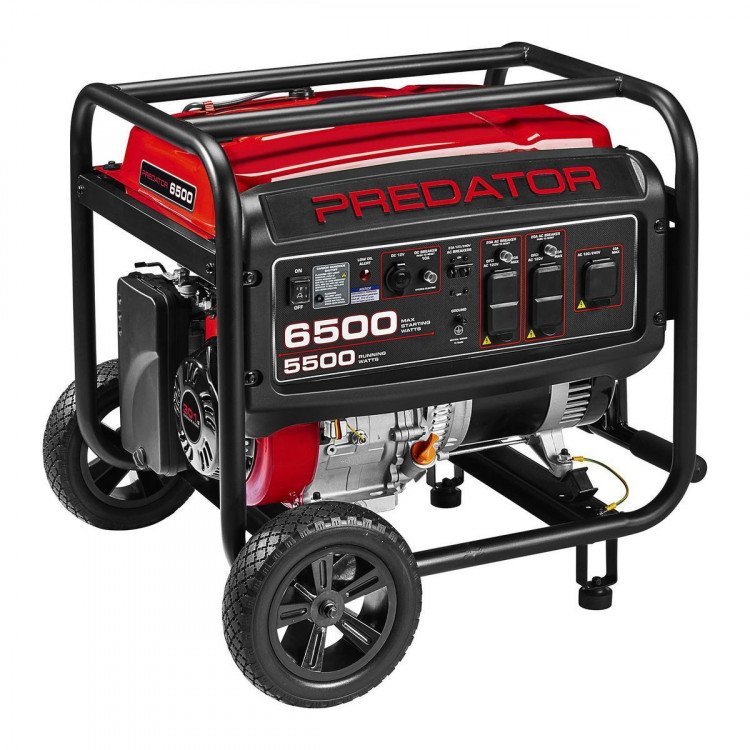
Navigating power outages, powering a bustling food truck, or keeping a construction site humming requires a reliable workhorse – and for many, that’s where the Predator 6500 Generator Setup, Operation & Safety guide becomes indispensable. This powerhouse strikes an impressive balance between raw output and practical portability, making it a go-to choice for homeowners, entrepreneurs, and tradespeople alike. But owning such a robust piece of equipment means understanding not just how to use it, but how to use it safely and effectively to unlock its full potential.
Consider this your essential field manual, penned by a seasoned expert, to ensure your Predator 6500 serves you reliably, efficiently, and most importantly, safely.
At a Glance: Your Predator 6500 Essentials
Here's a quick rundown of what makes the Predator 6500 a popular choice, and what you need to know right away:
- Engine: Robust 420cc OHV gas engine.
- Power: 6500 Peak Watts / 5500 Running Watts.
- Fuel & Runtime: 5-gallon tank provides ~14.5 hours at 25% load.
- Starting: Manual recoil pull start.
- Outlets: Four 120V 20A, one 120V/240V 30A twist-lock, one 12V DC.
- Key Features: Low Oil Shutdown, Fuel Gauge, Automatic Circuit Breakers.
- Mobility: Integrated wheel kit and fold-down handles for easier transport.
- Value: Often priced significantly lower than comparable national brands for its power class.
Why the Predator 6500? Powering Your World with Smart Value
The Predator 6500 isn't just another generator; it's a strategically positioned mid-range power solution. It's more capable than smaller recreational units, yet far more portable and budget-friendly than heavy-duty commercial behemoths. With 5500 running watts and a 6500 peak surge, it’s designed to handle a wide array of demanding tasks.
For homeowners, this translates to reliable backup during storm season, keeping refrigerators, freezers, lights, and even a well pump running. Contractors appreciate its ability to power circular saws, air compressors, and other essential tools on remote job sites. RV enthusiasts and campers find its 30-amp outlet perfect for connecting directly to their rigs, powering everything from an air conditioner to a coffee maker. And for mobile businesses, it's the invisible backbone, keeping food trucks cooking or event lighting aglow for hours on end.
This versatility, coupled with its "exceptional value" pricing (typically $549-$649), makes the Predator 6500 a compelling option for anyone seeking dependable power without breaking the bank.
Unboxing to Power Up: Your First Steps with the Predator 6500
Before you hear that satisfying rumble, a few initial setup steps are crucial. Think of this as preparing your power plant for its maiden voyage.
Building Your Foundation: Assembly and Placement
Your Predator 6500 arrives nearly ready to go, but you'll need to attach a few key components. The integrated wheel kit and fold-down handles are designed to make its 155-pound weight more manageable. Install these according to the manual – it's typically a straightforward process with basic tools.
Once assembled, choose your operating location carefully. Generators need to be on a level, stable surface to ensure proper lubrication and safe operation. More importantly, this location must be outdoors and well-ventilated, far from any windows, doors, or vents that could allow exhaust fumes to enter occupied spaces. We'll dive deeper into carbon monoxide safety shortly, but remember: outdoors is non-negotiable.
Fueling Up Smart: Oil and Gasoline Essentials
Getting the right fluids into your generator is paramount for its longevity and performance.
- Engine Oil: Your generator doesn't come with oil in the crankcase. You'll need to add approximately 1.16 quarts (or 37 ounces) of SAE 10W-30 engine oil. If you're operating in consistently cold temperatures (below 32°F / 0°C), a 5W-30 oil is recommended for easier starting. Always check the oil dipstick to ensure the level is correct – overfilling or underfilling can cause significant damage. The low oil shutdown feature is a great safeguard, but don't rely on it as an operating procedure; always check before starting.
- Unleaded Gasoline: The Predator 6500 runs on fresh, unleaded gasoline with an octane rating of 87 or higher. Crucially, avoid E85 fuel. While up to 10% ethanol content is generally acceptable, higher concentrations can degrade fuel lines and carburetor components over time. Always use fresh fuel; gasoline degrades rapidly, especially when exposed to air, and stale fuel is a leading cause of starting problems. Its 5-gallon fuel tank provides an impressive runtime, often up to 14.5 hours at a 25% load, which means fewer refueling stops during extended use.
Grounding for Safety: The Critical Earth Connection
Properly grounding your generator is a vital electrical safety step, protecting you from potential shocks and safeguarding the generator itself. This typically involves connecting a grounding wire from the generator's grounding terminal to a copper ground rod driven at least 8 feet into the earth. Consult your generator's manual for specific instructions on the gauge of wire and method. While not always legally required for non-transfer switch connections to a home, it's a best practice that adds an extra layer of protection.
Mastering the Start: Firing Up Your Predator 6500
With fluids in and safety measures in place, you’re ready to bring your generator to life. The Predator 6500 uses a manual recoil pull start, a reliable method once you get the hang of it.
Pre-Flight Checks: A Quick Scan Before Starting
Before each start, cultivate a habit of these quick checks:
- Fuel Level: Is there enough fresh gasoline?
- Oil Level: Is the engine oil at the proper mark on the dipstick?
- Condition: Are there any loose wires, components, or obvious damage? Are cooling inlets clear?
The Pull-Start Ritual: Bringing Power to Life
Follow these steps for a smooth start:
- Fuel Valve ON: Locate the fuel valve on the generator and turn it to the "ON" position. This allows fuel to flow from the tank to the carburetor.
- Choke CLOSED (for cold starts): If the engine is cold, move the choke lever to the "CLOSED" or "FULL CHOKE" position. This enriches the fuel mixture for easier ignition. If the engine is warm, you might only need half choke or no choke at all.
- Engine Switch ON: Turn the main engine switch (sometimes labeled "Start/Stop" or "Run") to the "ON" position.
- Pull the Starter Grip: Grasp the starter grip firmly and pull it rapidly with a strong, smooth motion. You might need a few pulls.
- Choke OPEN (as it warms): Once the engine starts and runs smoothly, gradually move the choke lever to the "OPEN" or "RUN" position. Do this slowly; if the engine sputters, push the choke back slightly until it smooths out, then try opening it again.
- Warm-Up Period: Allow the generator to run for 1-2 minutes without any electrical loads connected. This lets the engine reach optimal operating temperature and stabilize.
Connecting Loads: Powering Up Your Devices
Once the generator is running smoothly, you can begin connecting your appliances.
- Strategic Loading: Always connect larger, motor-driven appliances (like a refrigerator, well pump, or air compressor) first. These require a surge of "starting watts." Once they are running, their wattage demand drops to "running watts." After these heavier loads are stable, you can add smaller items like lights, TVs, or charging devices.
- Never Exceed Running Watts: The Predator 6500 has 5500 running watts. Continuously exceeding this limit will trip circuit breakers and can damage the generator. Manage your power consumption wisely, especially for home backup, where strategic use of appliances is key.
Safety First, Always: Protecting Yourself and Your Property
Generators provide incredible utility, but they demand respect. Adhering to strict safety protocols is non-negotiable.
The Silent Killer: Carbon Monoxide (CO)
This is the single most critical safety warning. Generator exhaust contains carbon monoxide (CO), an odorless, colorless, and deadly gas.
NEVER operate a generator indoors, in a garage, carport, shed, or any partially enclosed space.
- Outdoor Operation Only: Always place your Predator 6500 outdoors, at least 20 feet away from any windows, doors, or vents of occupied buildings.
- Direct Exhaust Away: Ensure the exhaust is directed away from homes and other structures.
- CO Detectors: Install battery-operated carbon monoxide alarms in your home, especially near sleeping areas, and check them regularly. They are your only warning.
Fire Prevention Best Practices
Generators operate with highly flammable fuel, so fire safety is paramount.
- Cool Before Refueling: Never refuel a hot generator. Let it cool completely for at least 15-20 minutes. Fuel vapor can ignite on hot engine components.
- Clean Spills: Immediately clean up any spilled gasoline. Do not start the generator until the fumes have dissipated.
- Flammable Clearance: Keep the generator clear of any flammable materials, debris, or combustible liquids. Maintain at least 3-5 feet of clear space around it.
- Proper Storage: Store gasoline in approved containers, away from living areas, heat sources, and direct sunlight.
Electrical Safety: Cords, Connections, and the Critical Transfer Switch
Improper electrical connections can be dangerous, causing electrocution or damage to appliances.
- Dry Conditions: Do not operate the generator in wet conditions (rain, snow) unless it is protected by an open, canopy-style structure that allows for ample ventilation. Never touch a generator with wet hands.
- Appropriate Extension Cords: Use heavy-duty, outdoor-rated extension cords that are properly sized for the appliance and the distance. Overly long or thin cords can lead to voltage drop and overheat. Check the cord's wattage or amperage rating.
- No "Backfeeding": This is a critical warning. Never plug your generator directly into a wall outlet of your home. This practice, known as "backfeeding," sends power from your generator through your home's electrical system and onto the utility grid. It can electrocute utility workers, damage your generator, and cause severe electrical hazards in your home.
- Transfer Switch or Power Inlet Box: For home backup, the only safe way to connect a generator to your home's electrical system is through a properly installed transfer switch or a power inlet box wired to a transfer switch by a qualified electrician. This isolates your home from the utility grid, preventing backfeeding. If this isn't an option, use extension cords directly from the generator to individual appliances.
Managing Your Power Load
Understanding your generator's capacity is key to safe and efficient operation. The Predator 6500 provides 5500 running watts and 6500 peak watts.
- Calculate Your Needs: Before an outage, list the appliances you must run and their starting and running wattages. Prioritize.
- Start Big, Then Small: As mentioned, connect your largest motor-driven appliances first, allow them to stabilize, then add smaller resistive loads (lights, TVs, chargers).
- Avoid Overload: If the generator sounds strained, or if circuit breakers trip, you're trying to draw too much power. Disconnect some loads immediately.
Keeping Your Powerhouse Healthy: A Comprehensive Maintenance Guide
Just like any engine, your Predator 6500 thrives on regular care. Consistent maintenance ensures reliability, extends its lifespan, and prevents costly breakdowns.
Before Each Use: A Quick Check-In
- Engine Oil: Verify the oil level is within the proper range.
- Air Filter: Inspect for excessive dirt or debris. Clean if necessary.
- Fuel: Confirm fresh gasoline is in the tank.
- Loose Parts: Quickly check for any loose nuts, bolts, or components.
- Cooling Inlets: Ensure air intake and cooling fins are clear of obstructions.
Scheduled Servicing: A Roadmap for Longevity
Adhere to this maintenance schedule, referring to your owner's manual for specific instructions and parts.
- After First 20 Hours (Break-in Period):
- Change Engine Oil: Crucial for removing metal wear particles from the initial break-in.
- Check valve clearance (if comfortable, otherwise professional service).
- Inspect and clean the spark arrestor.
- Every 50 Hours or 3 Months (Whichever comes first):
- Change Engine Oil.
- Clean the air filter.
- Clean the fuel sediment cup.
- Inspect and clean the spark plug.
- Every 100 Hours or 6 Months:
- Change Engine Oil.
- Clean/replace the air filter.
- Replace the spark plug.
- Clean the fuel tank and fuel filter.
- Check and clean the spark arrestor.
- Inspect the fuel line for cracks or wear.
- Every 300 Hours or Annually:
- Replace spark plug and air filter.
- Clean the combustion chamber.
- Check and adjust valve clearance.
- Clean the fuel tank and fuel filter.
- Check fuel lines thoroughly.
Key Maintenance Tasks Explained
- Oil Changes: With the engine warm, drain the old oil from the drain plug (be prepared, it can be messy!). Refill with approximately 1.16 quarts of fresh SAE 10W-30 (or 5W-30 for cold weather).
- Air Filter Service: The Predator 6500 typically uses a foam pre-filter and a paper element. Clean foam elements with soapy water, rinse, dry thoroughly, and lightly oil before reinstalling. Tap paper elements clean, or replace them if heavily soiled or damaged. A clean air filter is vital for engine performance and longevity.
- Spark Plug Service: Remove the spark plug (use a spark plug wrench). Inspect for fouling or wear. Clean carbon deposits with a wire brush or replace if badly worn (the equivalent is often an F7TC). Gap new or cleaned plugs to 0.028-0.031 inches (0.7-0.8mm).
- Carburetor Maintenance: If the generator struggles to start or run smoothly, the carburetor might be clogged, usually from stale fuel. You may need to drain the carburetor bowl, clean the main jet, and inspect gaskets. This can be more complex and might require professional help if you're not comfortable with small engine mechanics.
- Fuel System Care: Regularly check the fuel filter (often inline) and replace it if it appears clogged. Periodically cleaning the fuel tank of any sediment can prevent carburetor issues.
Long-Term Storage: Putting Your Generator to Sleep
If you plan to store your generator for more than 30 days, follow these steps to prevent fuel system issues:
- Fuel Stabilizer: Add a quality fuel stabilizer to the gas tank and run the engine for 10 minutes to circulate it through the fuel system.
- Run Until Starvation: Turn off the fuel valve and let the engine run until it completely runs out of fuel and stalls. This ensures the carburetor is empty, preventing gumming.
- Change Oil: Perform an oil change to ensure clean oil is stored in the engine.
- Lubricate Cylinder: Remove the spark plug, pour about one tablespoon of engine oil into the cylinder, slowly pull the starter cord a few times to distribute the oil, then reinstall the spark plug. This prevents cylinder rust.
- Clean and Cover: Clean the exterior of the generator and store it in a clean, dry, covered area.
When Things Go Sideways: Troubleshooting Common Predator 6500 Issues
Even with proper maintenance, issues can arise. Knowing how to diagnose common problems can save you time and frustration.
Starting Troubles: Why Won't It Fire Up?
- No Fuel/Stale Fuel: Check the fuel level and ensure the fuel valve is ON. If the fuel is older than 30 days, drain it and refill with fresh gasoline.
- Low Oil: The low-oil shutdown feature is a common culprit. Check and top off the oil.
- Choke Position: Is the choke in the correct position for a cold start (CLOSED)?
- Engine Switch: Is the engine switch ON?
- Spark Plug: Remove, inspect, clean, or replace the spark plug.
- Air Filter: A clogged air filter can restrict airflow.
- Carburetor Issues: Clogged jets (often from stale fuel) prevent proper fuel delivery. This may require cleaning or replacement.
Power Output Woes: No Juice or Intermittent Power?
- Tripped Circuit Breakers: Check and reset the individual circuit breakers on the control panel.
- Overload: Are you exceeding the 5500 running watts? Disconnect some appliances and try again.
- Faulty Outlet: Test other outlets. If only one isn't working, it might be a specific outlet issue.
- Engine Speed: The engine must maintain 3600 RPM to produce the correct voltage and frequency. If it's bogging down, it could be an overload or fuel issue.
- Internal Component Failure: Issues with the Automatic Voltage Regulator (AVR) or internal wiring can cause power problems. This often requires professional diagnosis.
Engine Performance Glitches: Running Rough or Stalling?
- Fuel Quality: Again, stale fuel is a common cause.
- Air Filter: A restricted air filter will choke the engine.
- Carburetor: Clogged jets or an improperly adjusted carburetor can cause rough running.
- Spark Plug: A fouled or incorrectly gapped spark plug can lead to misfires.
- Governor Adjustment: The governor controls engine speed under varying loads. If it's not adjusted correctly, the engine might surge or bog down.
- Spark Arrestor: A clogged spark arrestor in the muffler can restrict exhaust flow, causing the engine to run poorly.
Unusual Noises and Vibrations
- Loose Components: Check for loose bolts, engine mounts, or covers.
- Unbalanced Load: While less common, extreme imbalance can cause vibrations.
- Internal Engine Issues: Persistent knocking, grinding, or squealing can indicate serious internal problems (bearings, valves, connecting rod). Stop the generator immediately and seek professional service.
- Exhaust Leaks: Hissing or unusually loud sounds might indicate an exhaust leak.
Beyond the Basics: Enhancing Your Generator Experience
While the Predator 6500 is robust right out of the box, understanding its ecosystem and potential upgrades can further enhance its utility and your peace of mind. To Learn more about the Predator 6500 and its full range of capabilities, diving into user communities and expert reviews can provide invaluable real-world insights.
Essential Parts and Accessories
- Maintenance Kit: Keep spare air filters, an F7TC spark plug, and a bottle of SAE 10W-30 oil on hand. A fuel filter is also a smart addition.
- Generator Cover: Protects your investment from the elements during storage and light rain.
- Heavy-Duty Extension Cords: Invest in high-quality, outdoor-rated cords that can handle the amperage of your appliances without overheating. Look for 10-gauge or 12-gauge cords for longer runs and higher-wattage devices.
- Hour Meter: If not built-in, an aftermarket hour meter helps you accurately track run time for precise maintenance scheduling.
- Transfer Switch Kit: For home backup, this is a non-negotiable safety and convenience item, allowing seamless and safe power transition.
Understanding Its True Value: Performance vs. Price
The Predator 6500 consistently receives praise for its "excellent price-to-performance ratio." It offers significant power and impressive runtime (up to 14.5 hours on a single 5-gallon tank) at a price point that undercuts many competitors by hundreds of dollars. Its durable 420cc OHV engine, complete with cast iron cylinder sleeves and low-oil shutdown, speaks to its reliability.
However, it's not without its trade-offs. At 73 dB, it's louder than inverter generators, making it less ideal for quiet camping. Its 155-pound weight, while mitigated by the wheel kit, is substantial. And being a manual pull-start only model, some users might prefer the convenience of an electric start. While its voltage regulation is generally good for most standard appliances (within ±10%), it's not considered "clean power" for highly sensitive electronics without an external line conditioner.
Despite these minor criticisms, customer feedback largely highlights its reliability, strong power capacity, and long runtime as significant advantages. It's a workhorse built for practical power delivery.
Your Power Partner for Years to Come
The Predator 6500 generator, when properly set up, operated, and maintained, is a formidable tool in your arsenal. It excels as a reliable emergency backup for homes, a steadfast power source for construction sites, an enabling companion for RV adventures, and the silent partner for mobile businesses.
By diligently following the setup, operation, and safety guidelines outlined here, you're not just buying a generator; you're investing in peace of mind and sustained productivity. Remember the critical safety warnings, especially regarding carbon monoxide, and commit to a consistent maintenance schedule. With informed ownership, your Predator 6500 will provide years of dependable power, proving its worth far beyond its competitive price tag. Should you have technical questions, remember that Harbor Freight Tools offers support for the generator (1-800-444-3353) and its engine (1-800-520-0882), backed by a two-year Emission Control Defects Warranty for your confidence.